On August 27, Team Terry joined the County Line/Ellenwood community to discuss future plans for the Dr. Alice White Bussey Intergenerational Center, a project nearly 30 years in the making. Over 100 residents and community leaders, including Dr. Billups, Commissioner LaDena Bolton, and Commissioner Larry Johnson, came together in support of this effort. This 35,000 sq ft facility will provide amenities for all ages. Most importantly, the design will be shaped by community input.
Now is the time to share your voice! DeKalb Parks & Recreation is collecting feedback to make sure the center reflects what residents want most.
Visit: tinyurl.com/awblpark to provide your feedback! Submit online at dekalbcountyga.gov/parks
n partnership with Roots Down and GreenHive, neighbors gathered for “Garden Sips” at the Chamblee Library to enjoy herbal mocktails, explore the gardens, and continue to celebrate a major milestone: the passing of the DeKalb County Library Transition Plan!
This initiative will transform all 23 DeKalb libraries into vibrant, climate resilient, landscapes that are both beautiful and beneficial to the community. At the Chamblee Library, visitors learned how plants like lavender, mint, and rosemary can be used to make refreshing drinks while also supporting pollinators and healthy soil.
Our goal is to transform every library into a hub for climate resilience, community engagement, and environmental education. Events like this show how libraries can connect people with nature and with each other. Learn more about the Library Transition Plan here.
On August 12, 2025, the DeKalb County Board of Commissioners celebrated Pride with an annual proclamation honoring the movement for LGBTQ+ rights, celebrating the beauty of LGBTQ+ culture, recognizing the community’s global impact, and reaffirming a commitment to equality and justice for all.
In celebration, Commissioner Ted Terry (D-Super District 6) introduced a resolution “Requesting The Administration Implement A DeKalb County Police Department LGBTQ+ Police Liaison Position, Require Hate Crimes Identification Training For Law Enforcement, And For Other Purposes.” Both actions outlined in the title of the resolution were recommendations in a DeKalb County Equality Progress Report conducted in 2023 by Georgia Equality.
LGBTQ+ Police Liaisons are established in several municipalities across the country, including in the City of Chamblee and the City of Atlanta, with the goal of building trust between the police department and the LGBTQ+ community. The resolution references a 2024 study conducted by the American Civil Liberties Union (ACLU) titled “Policing Progress: Findings from a National Survey of LGBTQ+ People’s Experiences with Law Enforcement,” that found “LGBTQ+ people are less likely to report their victimization to the police, despite higher rates of victimization.”
“It is critical that the LGBTQ+ Community is heard, feels safe, and are supported, especially at a time when their community is facing both physical violence and harmful legislation that rolls back hard-won rights,” said Commissioner Ted Terry. “We must confront the reality that LGBTQ+ individuals are often less likely to report when they’ve been victimized. Implementing an LGBTQ+ police liaison is a meaningful step toward building trust and advancing a more just and equitable DeKalb.”
DeKalb County has fully committed a $5 million federal grant to assisting low- to moderate-income households by providing no-cost plumbing repairs, known as the DeKalb CARES Plumbing Repair Program. Team Commissioner Ted Terry is encouraging you to help share this information with family and friends who may qualify.
The county has contracts with three professional plumber firms to perform the repairs.
Eligible Repair Categories
Private Sewer Lateral Remediations
Septic to Sewer Conversions
Water Leaks – High Water Usage
Water Leaks – Inclement Weather Issues
Homeowner Eligibility
Property to be repaired must be the homeowner’s principal residence.
Must be a DeKalb County resident.
Total household income must be at or below the Area Median Income (AMI) for a family of four this amount ($65,500).
Team Commissioner Ted Terry is gearing up to March into a Cleaner Tomorrow and asking that you join us in this important effort and thank those who focus on this regularly.
Join the Great American Clean Up challenge by picking up litter in your community and recording the amount of litter has been picked up. This challenge begins NOW and runs through June.
As an FYI, the last day to schedule supply pickup is June 12th and as noted earlier…. This is a Super District 6 / Super District 7 challenge…. Or…. Call it a competition!!!
We are planning a celebration for the communities who collect the most garbage during this initiative…. So, Super District 6… Let’s Do This!!!
–
Team Commissioner Terry is sharing the awesome work of a small team from Long Range Planning attending the Sweep the Hooch and picking up litter as part of our “Great American Clean Up” challenge! See what they had to say about it:
“It was such a great experience—and we were so proud to be a part of Team DeKalb! We pulled a lot of junk out of that creek, including two grocery carts, a bunch of lumber, tires (which we separated out), and other debris.”
On December 10, 2024 Commissioner Terry hosted a virtual Ask Me Anything Town Hall: Proposed Water and Sewer Rate Increase. DeKalb County COO Williams, CFO McNabb, Watershed Management Director Hayes, Consent Decree and Environmental Compliance Director Houser were also in attendance.
“Ask Me Anything Town Hall: Proposed Water and Sewer Rate Increase” Video Recording
Many questions were asked prior to the zoom call. Below are the questions and answers.
If you do not see your question or have further questions. Please feel free to email us at ted@dekalbcountyga.gov
The below answers were provided by Commissioner Ted Terry and the Super District 6 Commission Office
QUESTION: I like your water reform proposals. What is the next step? Would you vote on these reforms at the same time as you vote on increasing the water and sewer rates?
ANSWER: These discussions have been ongoing at the Board of Commissioners, Committee of the Whole, and PWI Committee meetings. These reforms are currently being discussed hand in hand with the Water and Sewer Rate Increase. Our hope is these reforms will be codified in the rate increase.
QUESTION: What can be offered for seniors. Many are on a fixed income which is not increasing 8% each year. How can they plan for this increase! This along with the sewer increase will add fuel to the fire and drive seniors out of their homes. Will the county implement water restrictions to help manage the amount or water being used? Many need to change habits before they receive outrageous bills. Advocacy council for Seniors?
ANSWER: I understand the concerns that many residents have shared about affordability and equity. That’s why I’m supporting a slate of targeted reforms to offer a safety net for low-income residents facing rate increases, cut through billing confusion, and instill real consequences for mismanagement. One of these reforms is fully funding the DeKalb C.A.R.E.S. Discount Program, which provides meaningful financial assistance to those who need it most. This ensures that rate increases don’t disproportionately burden our most vulnerable neighbors. This program is crucial because most abnormally high water bills in our system are the result of old pipes in old homes breaking. Plumbing repairs can range from the $100s to several thousand dollars, repairs that must be made before bill credits can be issued. Ensuring that customers like our fixed-income seniors can pay for these repairs is fundamental to an equitable system.
QUESTION: Why is the water rate increasing?
ANSWER: DeKalb County’s water and sewer system is decades old and in desperate need of repair. The Federal consent decree requires us to make these improvements
QUESTION: Please explain the pros and cons of the various rate amounts proposed (6%, 7.5% 8%) and why you think, if you do, that the 8% annual increase for 10 years is the best plan. Also, why the decision must be made in December 2024 vs. early in 2025.
ANSWER: The answer to this question is discussed during the Special Called PWI Committee Meeting on 1/30. You can watch this presentation discussion during the Special Called PWI Committee Meeting on 1/30 by clicking here.
The below answers were provided by the DeKalb County Watershed Department.
QUESTION: What is the actual work being done? For a while, there were SAK contractors on our street, and they pop back up every once in a while. What are they doing?? Lining pipes with something? Replacing pipes? There should be more communication about the work itself — the work being done.
ANSWER: There are many projects in progress all around the county on both the water and sewer and sewer systems. The SAK contractor is primarily lining existing sewer pipe to seal them and are making point repairs were lining is not possible.
QUESTION: I can understand that improvements will cost us all more money. I am curious about what water pipes would be changed and how the water system would be upgraded. Would these changes involve main line pipes, lines coming into homes, storage pipes, or where. I have just this year changed all the pipes in my home. Now what would I have to do to get the pipes coming into my home from the street upgraded? Can such a change be done at this time? Thank you for responding to my question.
ANSWER: Watershed has completed an assessment of the county water mains and transmission. This assessment has scored the age , condition, composition of the pipe, and demand of the service area. Pipe with lowest scores are replaced and or upsized 1st. The assessment only covered public lines. The private lines are not included in this assessment and are the responsibility of the homeowner to maintain.
QUESTION: What happen to the infrastructure bill , what did Georgia do with there money ? Why can’t the state lottery which takes in billions pay for something like: police, teachers, firemen, we should not have to pay state taxes, you guys need to find other ways to get revenue, toll coming in to Georgia, when will the home get a break ?
ANSWER: DeKalb is in line to get Infrastructure bill when it is made availible to the county. Watershed is investigating all potential sources of funds to minimize or prevent the need for rate increases.
QUESTION: Hi! Can we advocate for subsidized water drinking filters? None of your constituents actually drink the water from the tap (but instead use too much of their income to purchase bottled water). Additionally, the costs of our terrible infrastructure is increased by all the chlorine and “cleaning chemicals” they put in our water – can we advocate for them to put in less chlorine since no one is using it for drinking anyway? …
ANSWER: Chlorine and Fluoride are the chemicals that the regulatory authorities require to be added to drinking water. The county meets the chemical level requirements of the regulatory agencies.
QUESTION: Are contracts drafted for utility upgrades with incentives for completion ahead of timeline? If not, why?
ANSWER: Contract do not allow incentives for early completion. Watershed has multiple contracts in place to get this work completed. Contractors with poor or slow performance are not given addition work to incentives.
QUESTION: I have four manholes & sewer lines on my property that follow a stream bed. For almost 30 years, the entire flow of the stream at times flowed into the sewer and the County did nothing even when the infiltration was proven to them by plumbing dyes. Consultant after consultant, one County official after another, came out as if no one had been out previously, such a waste of resources. When they finally sent a firm to line the sewer and fix the holes, it took three attempts due to first, the incompetence of County crews and then the lining company itself; they finally hired a second firm and it’s done, but we’re fed up. My question is, shouldn’t the County undertake an independent financial audit (including cost, performance, and safety), as well as forecast the anticipated costs to finish the repairs before asking residents to pay truly ridiculous water & sewer fee increases? It’s all good to create new agencies to help the less advantaged, but that doesn’t help many of us, especially retired folks who don’t qualify and these added costs plus massive property tax increases drive us out of our homes. The County has to do better! Should this entire program be handed off to a highly competent independent (not a County insider) engineering management firm to administer? Have all possible State or Federal funds been chased?
ANSWER: The county continues to search for any available funds to assist with this cost. Independent consultant are assisting the county with assessments, cost projections and work performance.
QUESTION: What is the justification for this price increase? What needs to be done to stop this from happening?
ANSWER: 6000 miles of buried pipe with an average age of 30 years and an increasing population warrants maintenance and upsizing
QUESTION: I’m wondering how these proposals will effect the Dekalb residents that have had outrageous water bills of thousands of dollars?
ANSWER: Funds can be used to ensure more accurate metering billing and improved water delivery.
QUESTION: What were the rate increases for the past 25 years? what was the budget for the rate increases? What was collected for this rate increase? What was the amount collected used for? How much of this allocated money is left in reserve? What is the new peak capacity of Snapfinger Wastewater Treatment Plant in terms of MGD … million gallons per pay; How is Polebridge going to help the consent decree issues when it is in a different water basin? Why has no one said that it was the companies in DeKalb that created the Consent Decree issues but the private citizens are paying for it?
We have a lot of questions that elected officials, watershed, Georgia EPD, and the EPA are avoiding like the plague. Most citizens are in the dark because DeKalb County uses legal suppression and gaslighting as primary tools to suppress this deadly situation in South DeKalb County?
ANSWER: the new capacity of Snapfinger is 44 MDG average with 70MGD peek. The Pole Bridge Plant receives as much as 20 MGD of the county sewer flow to treat. Companies in DeKalb are regulated by the industrial pretreatment program. The bigger issue are the private sewer laterals of homes that are not maintained and allow millions of gallon of rain water into the county sewer system.
QUESTION: Why are the proposed water and sewer rates possibly being increased and we do not know the amount of lead in our water? I am also concerned about the amounts of sludge that come from the factories in Atlanta. Are these hazardous wastes going to other areas?
ANSWER: DeKalb water does not have lead in it. DeKalb water far exceeds the regulatory requirements. DeKalb does not allow industrial waste in the sewer system. It must be treated to DeKalb standards before it reaches the public sewer.
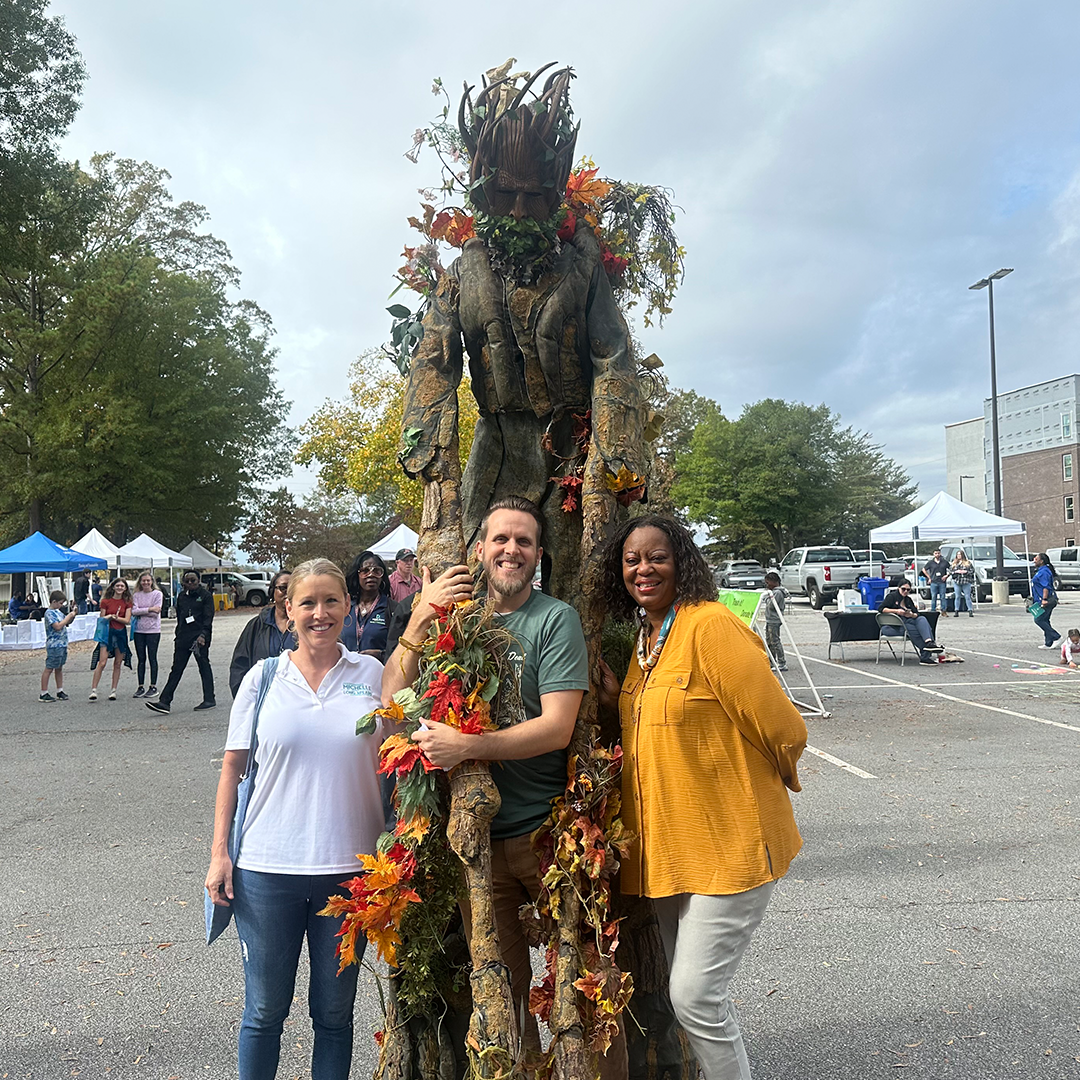
DEKALB COUNTY – Commissioner Ted Terry (D-Super District 6) proudly announces a successful collaboration with DeKalb County Planning and Sustainability through a joint event on Saturday, Nov. 9th that included over 200 attendees who enjoyed a day of fun while discussing sustainability, urban planning and the county’s growing commitment to environmental resilience.
Since its launch in 2023, the DeKalb Green New Deal has successfully mobilized a movement of over 700 climate champions and passed over 20 climate action policies, resolutions and initiatives. At this World Planning Day, Team Terry announced new goals for the DeKalb Green New Deal in 2025. They include ensuring the DeKalb Clean Energy Plan gets funded, DeKalb County follows through with the commitment to deploy clean energy projects, a Sustainability Fund is established, and an Environmental Justice Commission is established.
“The World Planning Day featuring the DeKalb Green New Deal Festival was a tremendous success, bringing together community members committed to a greener, more resilient DeKalb County,” Commissioner Terry said. “We’re excited to capture this energy and plan to harness it as we fight for environmental justice, equal access to resources and robust economic opportunities for our communities.”
“World Planning Day featuring the DeKalb Green New Deal Festival” featured partnerships with over 20 local organizations, businesses and performers. Attendees of all ages enjoyed live music and DJs, food trucks and eco-friendly workshops about composting, eco-friendly cleaning products and an introduction to planting.
“Partnering with our County Commissioners for the World Planning Day festival elevated our event to new heights. Featuring the DeKalb Green New Deal played a vital role to enhance our sustainability activities for the event,” said Cedric Hudson, Director of DeKalb County’s Planning and Sustainability Department. “This collaboration provided residents with valuable insights into the power of planning as a route to creating a sustainable future for DeKalb County.”
Initiatives like World Planning Day 2023 and the DeKalb Green New Deal Summit, have continued to inspire and engage residents across DeKalb County. Last year’s events saw hundreds of DeKalb County residents come together to plant trees with Trees Atlanta, learn vital water conservation techniques with Chattahoochee Riverkeeper, hike Arabia Mountain at sunrise, explore the unique design of a pocket neighborhood and discover the rewards of a productive urban landscape.
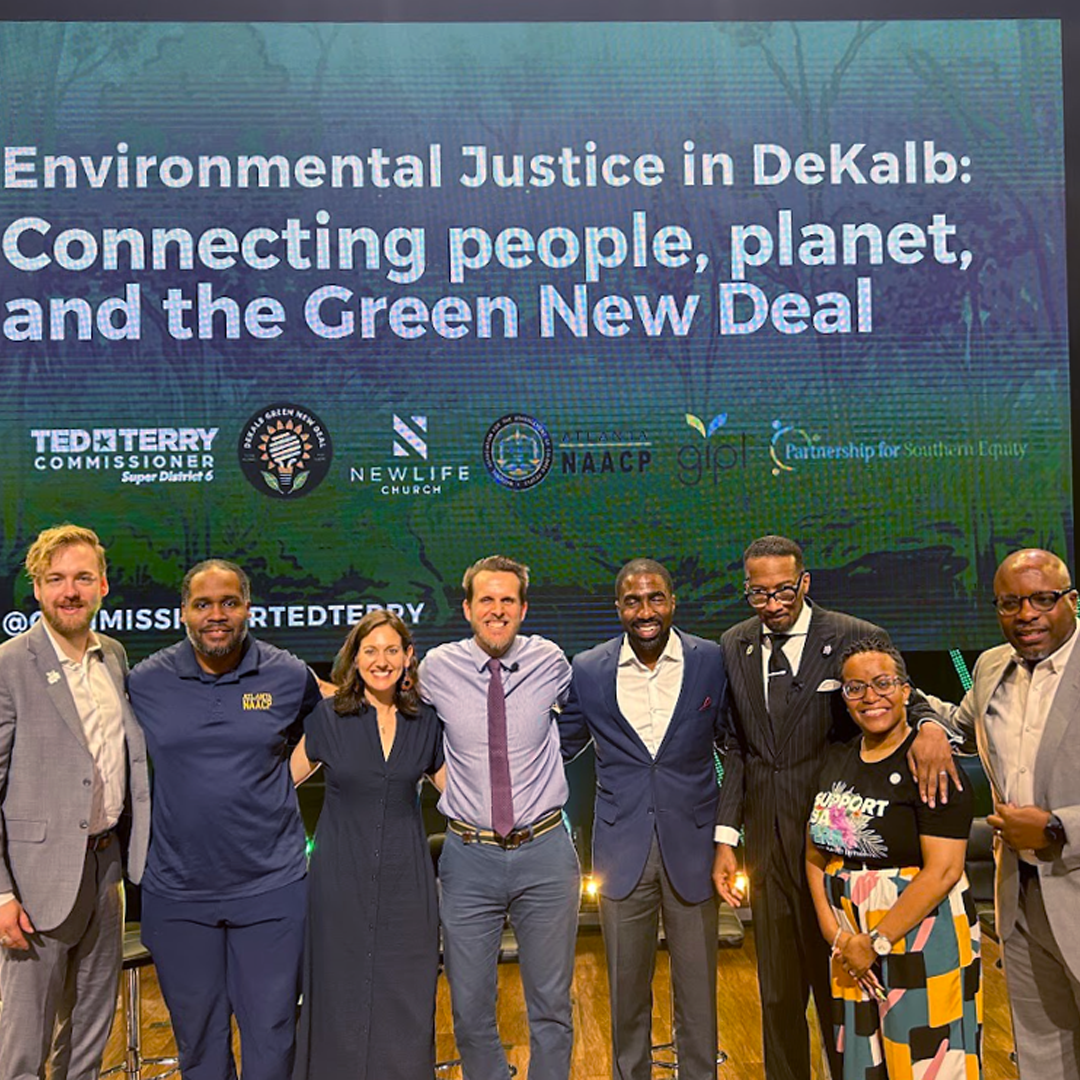
Panelist speakers from left to right: Codi Norred, Attorney Gerald Griggs, Joanna Kobylivker, Commissioner Ted Terry, Pastor Lee May, Djuan Coleon Smith, Lavonya Jones, and Rev. Marlin Harris
DEKALB COUNTY– This past weekend, Commissioner Ted Terry (D-District 6) alongside faith leaders gathered with community members to discuss the intersectionality of civil rights and environmental justice, underscoring the imperative to protect fundamental human rights like access to clean water and a safe environment for all residents regardless of race or socio-economic status.
DeKalb County residents have a long history of fighting against environmental injustices and this year Commissioner Terry proposed a resident-let environmental justice commission to address and advocate for environmental injustice and collaboratively identify short and long-term mitigation and restoration goals. The Board of Commissioners will vote on this resolution on July 23rd.
“As we seek to establish the Environmental Justice Commission, I want my community to feel empowered as we collectively address the environmental injustices that have burdened our communities for too long,” said Commissioner Terry (D-District 6). “Together, we will work to restore and improve a DeKalb County where environmental equity is not just a promise, but a reality.”
Panelists drew parallels between civil rights and environmental justice, emphasizing both as essential fights for human rights and calling for community action in the same spirit of activism that defined the Civil Rights era.
“The Civil Rights movement was about fighting for our basic human rights and yet again, we find ourselves in the same position, watching both action and inaction deteriorate the world we live in,” said Reverend Gerald Durley. “We can no longer accept that people in underserved communities are the most vulnerable to systematic neglect that impacts our waterways with waste and plastic and our neighborhoods with smog and pollution.”
Participants highlighted the disproportionate impact of pollution on underserved communities and advocated for clean up measures that would hold entities accountable for environmental harms.
“We need our communities to feel empowered, to know that they don’t have to endure the environmental injustice imposed on them,” said Attorney Gerald Griggs, President of NAACP Georgia. “That’s why we need to have these community events, to have these conversations so that together we can create a DeKalb County where everyone’s human rights are protected.”
There were close to one hundred residents present at this event, many of which expressed their interest in joining the proposed environmental justice commission.
Join Commissioner Ted Terry from District 6, DeKalb County as he explores a conversation about justice initiatives and programs with DeKalb Chief of Police, Mirtha Ramos, DeKalb Public Defender, Claudia Saari, and Renee Dryfoos of the DeKalb Community Service Board.