JOIN US IN
Moving DeKalb
Forward
Welcome to the DeKalb County Super District 6 Office
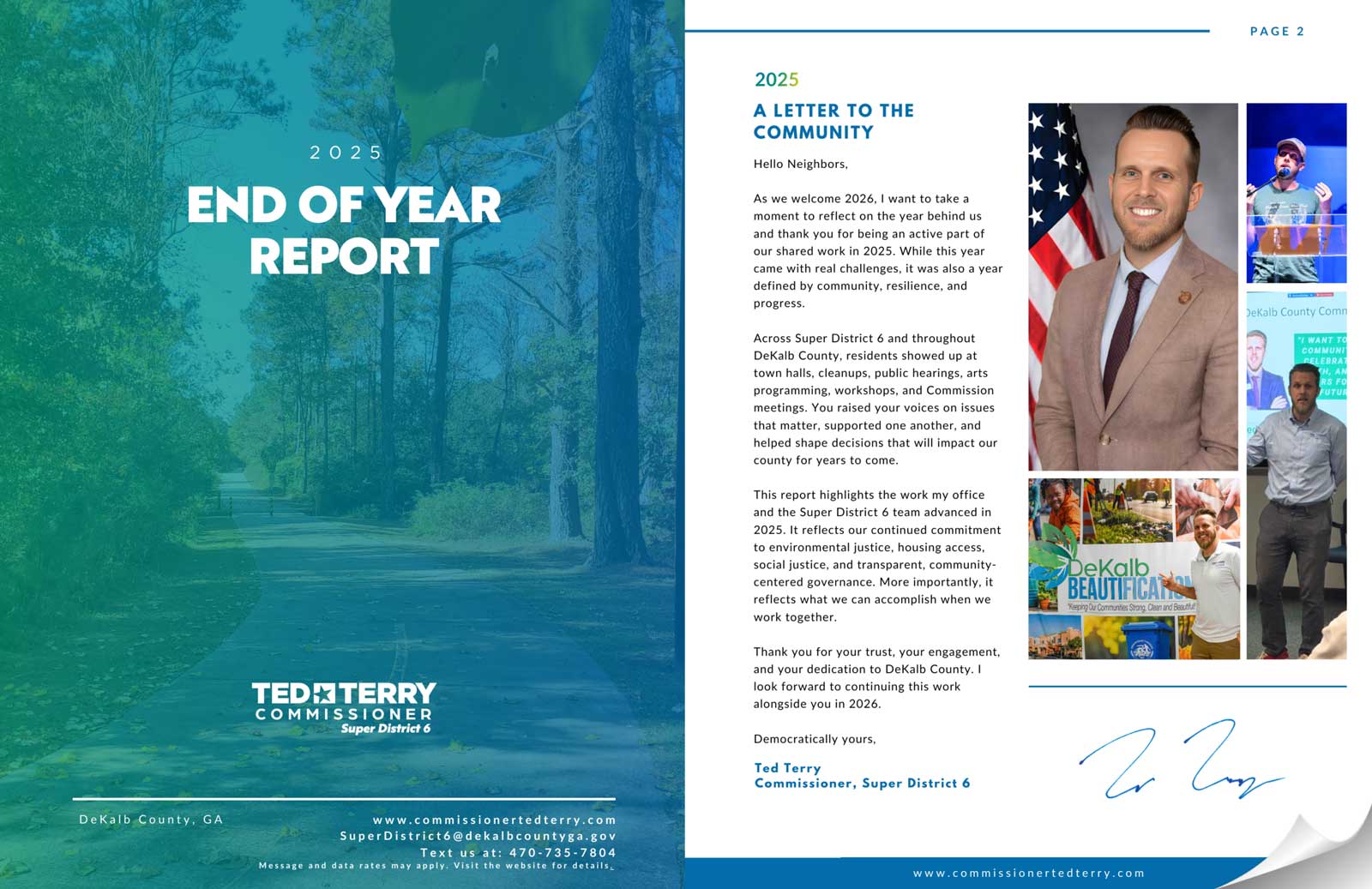
DeKalb is a county like none other. We boast an amazing array of diverse cultures, businesses and people. We’re a neighborly community and we know that in order to create the best county we can, we need to work together. Our staff is committed to serving the residents of District 6, and the only way we can move our county forward is if we work together to build a safer, greener and more prosperous DeKalb.
"I want to build a community that celebrates our youth, and opens doors for their futures.”
- Super 6 Commissioner Ted Terry
Commissioner Terry's Work
Since taking office:
20K
Constituents Responded To
40
Bills Authored & Passed
$4.9M
Money Appropriated
Commissioner Terry's Work
Since taking office:
20K
Constituents Responded To
40
Bills Authored & Passed
$4.9M
Money Appropriated
Common Resources
"Together, we can create a safer, greener and more prosperous dekalb.”
- Super 6 Commissioner Ted Terry
Commissioner Ted Terry
2,285
DeKalb Super 6 Commissioner. Together, with your support, we’ll build a DeKalb that is safer, greener and more prosperous.
19 hours ago
Thinking about starting a pollinators garden? Team Commissioner Ted Terry is sharing information about "bee kind" plants that keep bees fed from March through October:![]()
- Crocus — the first flower many bees see after winter. Early-emerging queen bumblebees depend on crocus pollen to start new colonies. Without early bloomers, spring nesting fails before it begins![]()
- Lavender — thousands of tiny nectar-rich florets that bloom for weeks. Honeybees, bumblebees, and mason bees all work it heavily through summer![]()
- Sunflower — each flower head contains hundreds of individual florets loaded with pollen. Bees spiral inward from the outer ring, feeding methodically. One sunflower keeps dozens of bees busy in a single day![]()
- Borage — refills its nectar rapidly, faster than most garden plants. Bumblebees learn the rhythm and return on schedule. Its blue star-shaped flowers are among the most heavily visited blooms in any garden![]()
- Catmint — blooms from late spring through fall with almost no care. Dense purple spikes produce nectar continuously, filling the gaps when other flowers fade between bloom cycles![]()
- Oregano — most gardeners harvest it before it flowers. Let one plant bloom and it becomes a magnet for small native bees and sweat bees that larger flowers exclude![]()
- White Clover — the most underrated bee plant in any yard. A patch of clover feeds more bees per square foot than most cultivated flower beds. Mowing less often is the easiest pollinator action most homeowners can take![]()
- Goldenrod — falsely blamed for allergies caused by ragweed. Goldenrod is insect-pollinated, not wind-pollinated. Late-season bee colonies depend on it to build winter reserves![]()
- Sedum — blooms in early fall when most gardens are winding down. Flat-topped flower clusters give bees a final critical feeding window before dormancy
1 day ago
Team Commissioner Ted Terry is thanking Glenn Burns for this warm welcome forcast we have been waiting for! Happy Spring, folks... it's going to be super warm during the next weeks!
... See MoreSee Less