
To my neighbors across DeKalb County,
Late Tuesday afternoon, when the public had left the room after we tabled the item to the end of the meeting, the DeKalb County Board of Commissioners voted 5–2 to approve a new unauthorized camping ordinance. Since then, my inbox and phone have been flooded with messages.
Many of you wrote to thank me and Commissioner Michelle Long Spears for standing firm and voting “no.” A few reached out with deep frustration, arguing that street encampments have become an untenable public safety and health concern in our business corridors and neighborhoods, and that the Board had to “do something.”
To those neighbors who are frustrated, let me say this directly: I hear you, and your concerns are entirely valid.
Nobody in DeKalb County — housed or unhoused — should have to accept sidewalks blocked by tents, hazardous biohazards near storefronts, or people languishing in conditions that no human being in a civilized society should endure.
We all want the exact same outcome: clean, safe neighborhoods, public spaces that are open and welcoming to everyone, fewer encampments, and real compassion for the most vulnerable among us.
Where my colleagues and I disagree is not on the goal, but on the cure.
Tuesday’s ordinance offers the illusion of action. It tells our community that by outlawing camping and giving someone 24 hours to move their tent or face arrest, we have solved the problem. But moving someone from a sidewalk on Memorial Drive to an embankment along I-285, or into an overcrowded jail cell at the DeKalb County Jail for 48 hours (and sometimes 300+ days), is not a solution. It is an expensive, bureaucratic shell game that shuffles poverty around the county, wastes taxpayer dollars, and leaves the encampment right back where it started a few weeks later.
We cannot arrest our way out of a housing shortage. If we genuinely want to end encampments, we have to look at the evidence and build a system that works from the ground up.
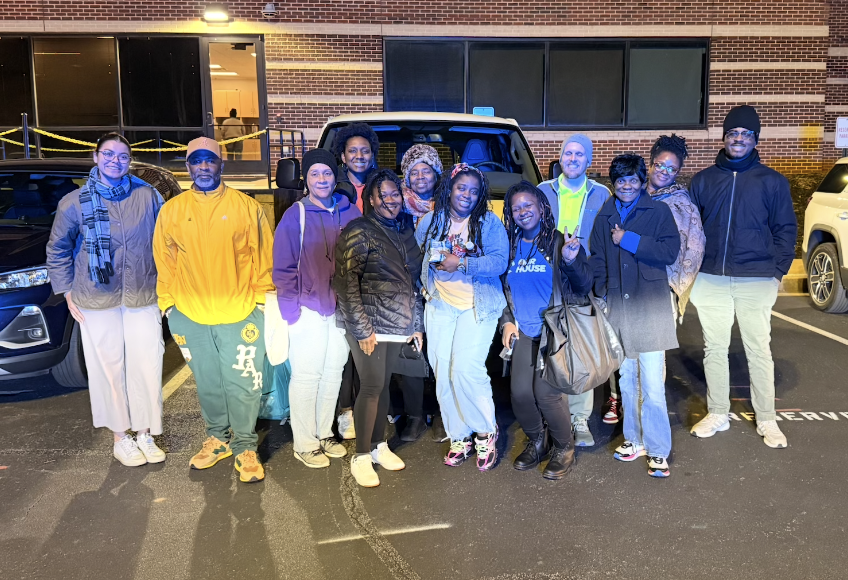
What I Learned on DeKalb’s Streets at 2 A.M.
Over my 13 years in elected office — first as Mayor of Clarkston and now representing over 370,000 residents across Super District 6 — I have participated in seven federally mandated Point-in-Time (PIT) Counts.
The PIT count is not an academic exercise. It is a grueling, late-night journey into the unseen corners of our county. When most of our community is asleep in warm beds under safe roofs, teams of volunteers and outreach workers fan out to every corridor of DeKalb — from wooded lots off Buford Highway, highway underpasses, to suburban strip-mall parking lots — to survey those living unsheltered.
To say people are “sleeping” outdoors is often a misnomer. To close your eyes on the street is to invite violence, theft, and exploitation. People are in a perpetual state of hypervigilance, living in fight-or-flight mode.
And the statistics bear this out: unhoused individuals are overwhelmingly more likely to be the victims of violent crime than the perpetrators of it.
During these seven counts, I have surveyed hundreds of individuals, and one realization continuously shatters the common myth that people on our streets are “transients shipped in from elsewhere.” On the contrary, the vast majority of unhoused people in DeKalb are from DeKalb.
They grew up in our school systems. They have family living three blocks from the wooded lot where their tent is pitched. Their home is, in fact, DeKalb County.
There is no single story of homelessness here:
- I have sat with senior citizens whose entire monthly Social Security check only pays for three weeks in an extended-stay motel, leaving them to spend the fourth week of every month sleeping in their cars or on the street while waiting for the next deposit.
- I have met LGBTQ youth who were kicked out of their family homes with nothing but a backpack, and women who fled domestic and sexual violence with nowhere to run.
- I broke down talking with a young woman living outside who had rescued a stray dog. She desperately wanted a job, but no shelter would allow her companion inside. She refused to abandon the only creature in the world that offered her unconditional love and protection, so she remained on the street.
- I have met men sleeping in the back of an auto repair lot in an abandoned junk car because the shop owner let them stay in exchange for cleaning the grounds and keeping an eye on the property at night.
- And yes, I have encountered individuals who have decompensated so severely from untreated psychiatric illness or addiction that they cannot answer basic survey questions — these are people who need immediate clinical stabilization, not a criminal citation.
This is the reality of our community.
Yet, in all my years participating in the PIT count, I have rarely seen my colleagues from the Board of Commissioner participating. With the exception of former Commissioner Steve Bradshaw and Commissioner Long Spears, who have spent hours walking these streets with me, and Commissioner Bolton stopping by briefly last year, the majority of the Board of Commissioners — who voted in favor of this ordinance, mind you — have never spent a night engaging face-to-face with the people this ordinance targets.
It is a tragedy to pass laws regulating a crisis when you have never spent the time to understand the system from the ground level.
The View from the Jail Floor and Lessons from Texas
If you want to understand why criminalizing sleeping outside fails, you only need to tour the psychiatric housing floor at the DeKalb County Jail.
I have walked that floor. It is heartbreaking, sobering, and closer to what you might imagine an asylum in an old film would look like than a modern facility. The Sheriff’s Office and correctional staff are doing the absolute best they can with an impossible mandate, but our jail has become the county’s largest de facto mental health institution.
Housing an unhoused person in that jail costs local taxpayers between $110 and $200 every single day, compared to roughly $35 to $50 a day to support someone in transitional, non-congregate housing.
When we arrest someone for “urban camping,” they spend a few days in a cell, often miss their follow up court dates because they have no address or phone, rack up failure-to-appear warrants, lose their identification and survival gear in the sweep, and get released right back onto our streets far more destabilized and unemployable than before.
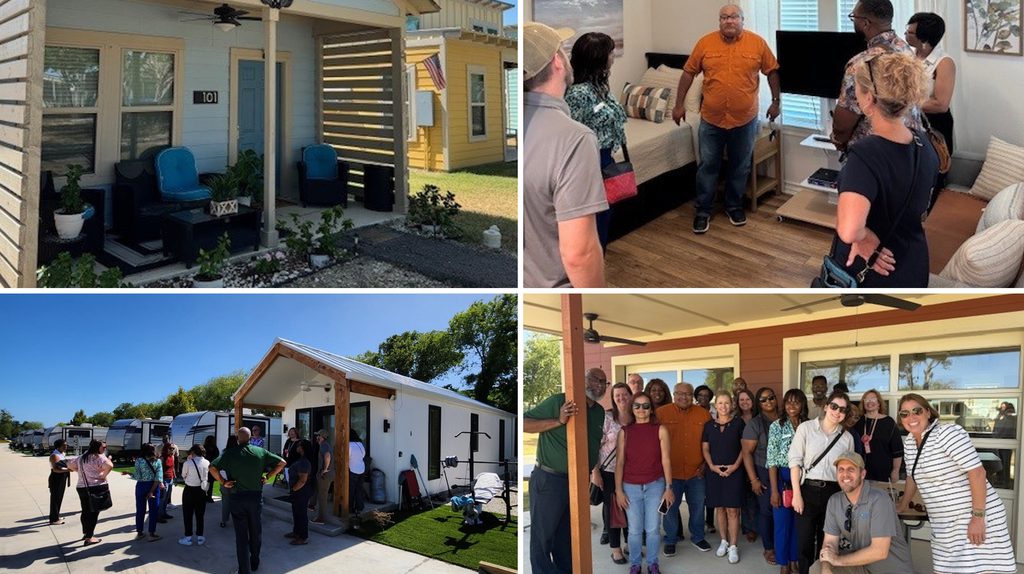
Last August, in the sweltering heat, Commissioner Long Spears organized a DeKalb delegation trip to San Antonio (Bexar County) and Houston (Harris County), Texas. We wanted to see how progressive, Democratic urban communities operate within a deeply conservative state that has passed strict and punitive anti-camping mandates.
What we found was eye-opening. Houston and San Antonio didn’t clear encampments by turning their police into garbage collectors and jailers. They succeeded by building coordinated, cross-silo systems:
- They created single-occupancy transitional units where people had private rooms, locking doors, and a place for their pets.
- They deployed specialized teams of clinicians, social workers, and marshals who spent weeks building relationships before a site was ever touched.
- They established clear, multi-layered administrative protocols that treated camp clearings as a complex social and medical transition, not a rapid-fire eviction.
More recently, the City of Denver demonstrated what happens when you combine real capacity with structured, compassionate rules. Between 2023 and 2025, Denver reduced unsheltered homelessness by 64% and cut large encampments by 91%. They didn’t do it by throwing people in jail; they did it by purchasing old motels and building modular tiny-home villages (The Aspen and Elati Village).
When the city offered people a private room with a lock on the door and wraparound medical care, nearly 100% of people voluntarily accepted housing. Denver proved that when you offer people a viable, dignified alternative to a tent, they take it.
DeKalb passed an ordinance demanding people leave their tents, but we haven’t given them anywhere to go.
Next Steps to Real Solutions: The Path Forward
The vote on Tuesday was a setback, but our work is far from over.
If we want to genuinely resolve encampments, protect neighborhood safety, and uphold human dignity, here is what we must do right now:
- Urge CEO Lorraine Cochran-Johnson to Veto the Ordinance. During the Board’s debate, the administration never presented a clear plan, operational budget, or standard operating procedure for how law enforcement and sanitation crews are supposed to execute this law, which takes effect immediately.
- We need a pause on new enforcement until a comprehensive, workable response system is in place and tested. I urge CEO Cochran-Johnson to exercise her executive veto to prevent an unworkable mandate from flooding our jail and courts.
- Fund and Deploy Specialized Encampment Co-Responder Teams. A budget item exceeding $1 million to expand street outreach and non-congregate shelter has been stalled in the PECS Committee for months. We must unstick these funds immediately and create specialized multidisciplinary co-responder units. These teams should pair licensed clinical social workers, street medicine providers, and peer navigators with trained public safety personnel to work specifically on persistent encampment hot spots.
- Amend the Ordinance with a Graduated Protocol and 180-Day Enactment. If the CEO does not exercise her veto, we must immediately introduce a legislative amendment to Section 16-65 to establish a rigorous, transparent standard operating procedure. This amendment must include a 180-day enactment window to give the administration time to build, fund, and pilot the expanded response system before police enforcement begins.
This protocol must replace the blunt “24-hour warning then arrest” mechanism by:
- Extending advance notice from 24 hours to at least 72 hours, aligning with national best practices.
- Providing secure 30-day property storage so people don’t lose their birth certificates, medications, and mobility devices.
- Empowering outreach clinicians to utilize medical 1013 transports to psychiatric receiving facilities for individuals who are actively decompensating and unable to care for themselves, rather than routing them into a jail booking queue.
- Expand Emergency Receiving Facilities (ERF) and Crisis Stabilization Beds. DeKalb County taxpayers currently spend millions of dollars sending unhoused residents with acute mental health crises through the emergency room at Grady or through the jail system.
I have championed a comprehensive plan to expand our local Crisis Center and ERF beds integrated with transitional housing.
The financial case is overwhelming: DeKalb builds the capital facilities, and the Georgia Department of Behavioral Health and Developmental Disabilities (DBHDD) provides the operating funds.
This model would pay for itself in less than five years, divert vulnerable individuals away from a jail that costs three times as much, and finally break the revolving door of emergency room discharges.
Get Involved and Support the Frontlines
Ending homelessness is not a challenge that the government can solve in a silo.
I urge our community to step forward and support the frontline organizations doing life-saving work every single day: volunteer with and donate to A Home for Everyone in DeKalb, partner with HouseATL, and back the faith communities and local shelters that provide real refuge across our county.
Leaving DeKalb Better Than We Found It
It is easy to vote for an ordinance that promises quick results. It is far harder to do the painstaking, complex work of building housing, coordinating clinical care, and reforming broken institutions.
Passing a camping ban without shelter beds is a short-term political Band-Aid that leaves the underlying wound untreated. It will make things worse for our neighborhoods, worse for our budget, and worse for the human beings sleeping outside.
Our calling as public servants is to leave this community better than we found it. That means choosing real solutions over empty optics. I will continue fighting for a DeKalb County that is safe, orderly, and just — one where we don’t just sweep our challenges out of sight, but actually solve them together.
Commissioner Ted Terry
DeKalb County Super District 6